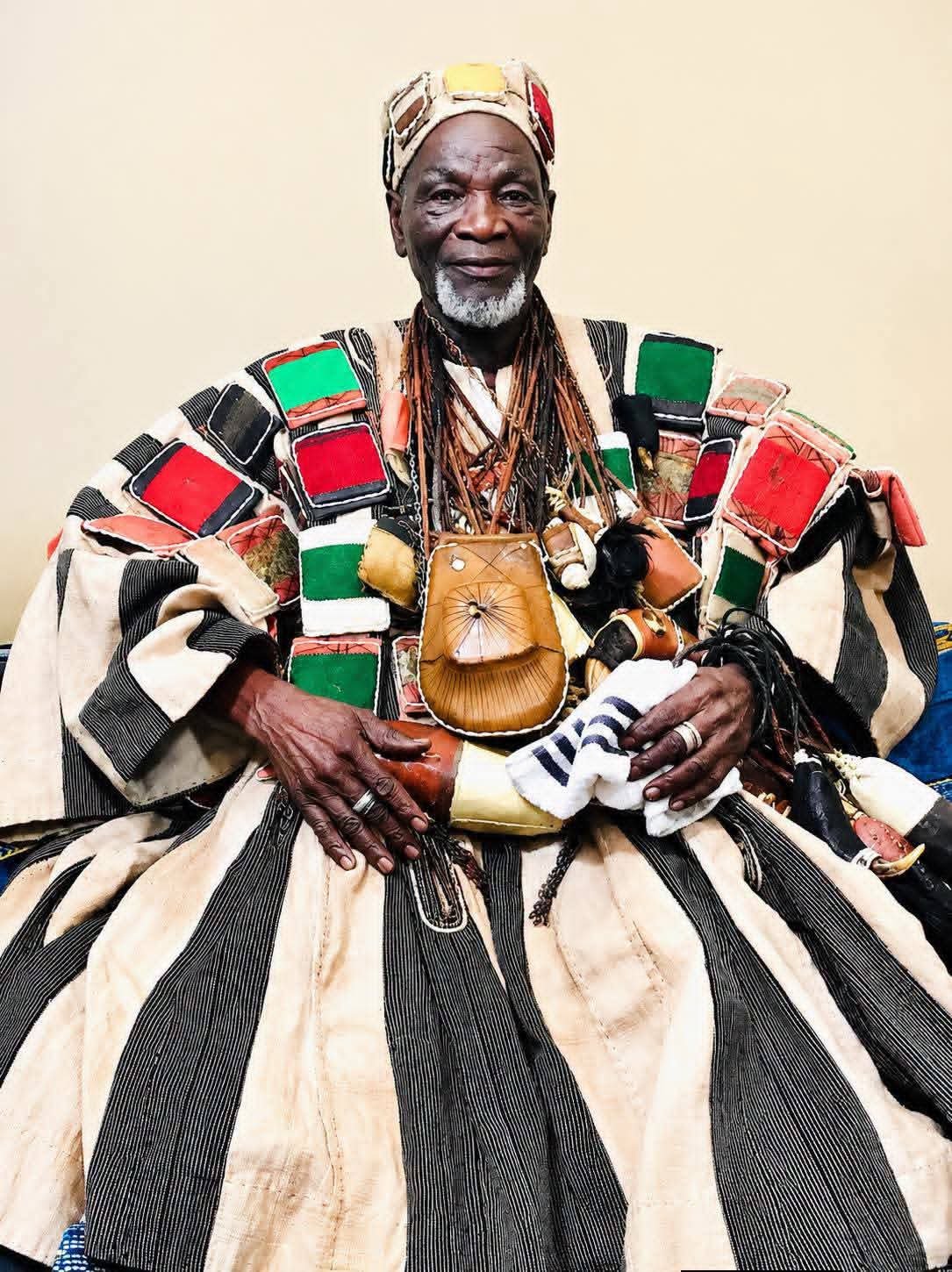
Full profile of the late Yaa Naa Mahama Abukari II — his royal birth, Dagbon naming tradition, rise through the gate skins, reign, and legacy.
NAA GARIBA II,
Profile of the Late Yaa Naa Mahama Abukari II: Life, Lineage & Legacy
The late Yaa Naa Mahama Abukari II, Overlord of the Dagbon Kingdom, lived a life shaped from birth by royal tradition — born into the Yendi skin’s lineage, trained away from the palace in Dagbon custom as a child, and ultimately called upon decades later to heal a kingdom divided by one of Ghana’s longest chieftaincy disputes. This profile traces his royal birth, his rise through Dagbon’s gate skins, and the legacy of reconciliation he leaves behind.
Early Life and Royal Birth
Yaa Naa Mahama Abukari II was born on 10th October 1938 at Yani (Yaa Nayili), the traditional seat of the Yaa Naa. He was born into rare and significant timing: his father, Mahama Kpema, had just been enskinned as Yaa Naa Mahama II earlier that same year, 1938 — and the young prince was the first child born to his father after that enskinment.
The Dagbon Naming Tradition of “Sugri”
In the Kingdom of Dagbon, the first child born to a chief after his enskinment is given a special traditional name: Sugri, alongside whatever additional names the family chooses. In keeping with this custom, the family of the newly enskinned Yaa Naa Mahama II named their son Abukari, Gariba, and Sugri — names that would follow him for the rest of his life and, decades later, into his own reign as Yaa Naa Mahama Abukari II.
Sent Away for Traditional Training
As is customary for children of the Yaa Naa, Abukari did not remain at the palace for long. At around 5 to 6 years old, he was sent away from the Yaa Naa Palace to a different house or community — typically within the extended royal family — to be trained in Dagbon traditions and customs. This early immersion in Dagbon custom would shape the traditional authority he later carried as Overlord of Dagbon.
His Father’s Reign: Yaa Naa Mahama II (Mahama Kpema)
To understand the household the young prince was born into, it helps to look at his father’s reign. Yaa Naa Mahama II — known within the family as Mahama Kpema — was enskinned in 1938 to the Yendi Skin, the supreme royal throne of the Overlord of the Dagbon Kingdom, ascending to the highest traditional office at the historic Gbewaa Palace in Yendi.
His reign lasted approximately 10 years, ending with his death on 6th February 1948.
Rising Through Dagbon’s Gate Skins
Long before he would himself become Yaa Naa, Abukari’s path to the Yendi throne followed the traditional route through Dagbon’s gate skins. He first served as chief of Kpunkpono, before later being elevated to the skin of Savelugu — one of only three traditional gate skins in Dagbon from which a Yaa Naa may be selected.
Ascension as the 41st Yaa Naa
Yaa Naa Mahama Abukari II became the 41st Yaa Naa in January 2019, following the successful implementation of the Dagbon Peace Roadmap — a landmark agreement that finally ended the protracted chieftaincy conflict between the Abudu and Andani royal gates, a dispute that had divided the kingdom for close to two decades. His enskinment represented the formal reunification of the two gates and ushered in a new period of stability across Dagbon.
A Reign of Peace, Reform, and Development
As Overlord of Dagbon, Yaa Naa Mahama Abukari II used his seven years on the Yendi skin to rebuild both the institutions and infrastructure of the kingdom:
- In 2020, he initiated a review of the Dagbon Constitution, aimed at strengthening the kingdom’s traditional governance system and addressing emerging challenges.
- In 2021, he launched the Dagbon Development Fund, mobilising resources for the socio-economic advancement of Dagbon.
- On 4th March 2023, he cut the sod for the reconstruction of the historic Gbewaa Palace, a project supported by contributions from individuals, corporate organisations, and state institutions.
His Passing and Legacy
Yaa Naa Mahama Abukari II died on 13th July 2026, after seven years on the Yendi skin. He is remembered above all for restoring peace to Dagbon after nearly two decades of division, reconciling the Abudu and Andani royal gates, and leaving behind a kingdom transformed by unity, reform, and renewed traditional authority.
For Tamale and the wider Dagbon Kingdom, his life story — from a royal birth steeped in tradition to a reign defined by reconciliation — will remain a defining chapter in the region’s history for generations to come.
This profile will be updated as further details on the life and legacy of Yaa Naa Mahama Abukari II are released.
For Correction’s/updates contact us
TAMALE GHANA