
TAMAL, GHANA,
Tamale: The Vibrant Capital of Ghana’s Northern Region
Tamale (Dagbani: [ˈtamali]) is the capital city of the Northern Region of Ghana. It stands as the country’s third-largest city and has been recognized as the fastest-growing city in West Africa. Located within the historic Kingdom of Dagbon, Ghana’s oldest kingdom, Tamale is a bustling hub of culture, agriculture, and rapid urban development.
Overview & Key Facts
- Population: 374,744 (2021 Census)
- Mayor (as of 2025): Hon. Abu Takoro
- Status: Capital of the Northern Region
- Traditional Occupants: Dagomba people (Dagombas)
- Other Ethnic Groups: Gonja, Mamprusi, Akan, Dagaaba, and others.
- Major Religion: Islam (90.5%)
📖 Word Clarification: “Tamale”
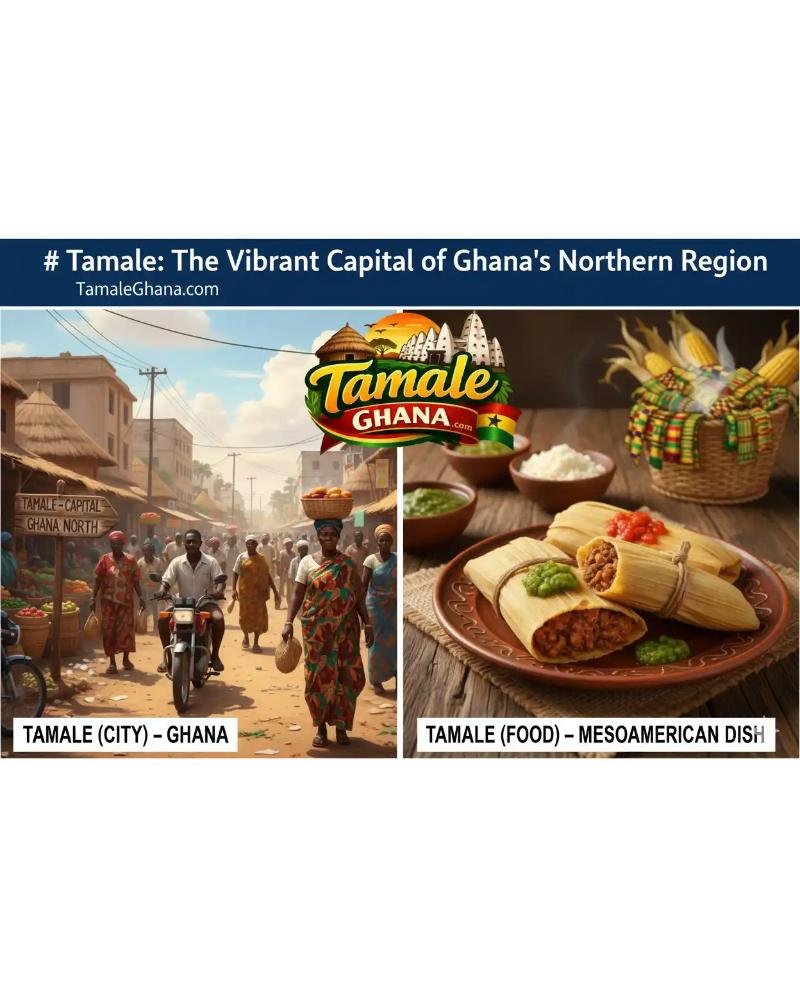
The word “Tamale” is a homonym—it refers to two completely different things: a major city in West Africa and a traditional Mesoamerican food. Their shared spelling is a coincidence of language. The table below highlights their key differences:
| Feature | Tamale (City) | Tamale (Food) |
|---|---|---|
| Type | A city and the capital of Ghana’s Northern Region. | A traditional dish. |
| Pronunciation | / təˈmɑːli /. | /təˈmɑːli, təˈmɑːleɪ/. |
| Origin | Derived from the Dagbani language; named for Chief Tama or from “Tamani” (shea forest). | From the Nahuatl word tamalli, meaning “wrapped”. |
| Context | Geography, urban development, West African culture. | Culinary, Mesoamerican history and culture. |
#City
Tamale (/ təˈmɑːli /)
noun
The capital city of the Northern Region of Ghana and the third-largest urban center in the country. It is a major economic, political, and educational hub for northern Ghana. The city is noted for its rapid growth, rich Dagomba culture, and status as the fastest-growing city in West Africa.
Etymology: The most cited origin is that it derives from the Dagbani word “Tamaale,” meaning “the house of Tama,” referring to a legendary chief who founded the settlement. An alternative folk etymology suggests it comes from “Tamani,” referring to the area’s shea forests.
#Food
tamale (/təˈmɑːli, təˈmɑːleɪ/)
noun
A traditional Mesoamerican dish made of seasoned meat and maize flour (masa) steamed or baked in a corn husk or banana leaf. The dish dates back thousands of years to the Aztec and Maya civilizations, where it was considered sacred food and practical sustenance for travelers and warriors.
Etymology & Culture: The English word “tamale” is an anglicized version of the Spanish tamal, which comes from the Nahuatl (Aztec language) word tamalli meaning “wrapped”. Making and eating tamales remains a deeply rooted cultural tradition, especially during holidays and family gatherings in Mexico and Central America.
History of Tamale
Early Settlement and Colonial Influence
The area now known as Tamale originally consisted of small villages under the Kingdom of Dagbon and was a key destination for regional cattle trails. Its transformation began in 1907 when the British established an administrative headquarters there, aided by the Dakpema (local chief). This move was partly a strategic response to German colonial activity in nearby Yendi.
The city’s growth accelerated with the construction of the “Great North Road” in the 1920s, turning Tamale into a vital commercial center for the Northern Territories. Throughout the 20th century, its population swelled as people sought its relatively better water supply and electricity, leading to urban expansion and some tension over land and traditional authority.
Modern Era
Tamale was declared the capital of the newly separated Northern Region in 1960. In the 21st century, it continues to grow rapidly, though not without challenges. An incident highlighting social tensions, the Lamashegu shooting, occurred in February 2022 when a clash between police and local youth resulted in one fatality and several injuries.
Economy and Demographics
Economic Landscape
Tamale’s economy has diversified from its agrarian roots but remains closely tied to the land.
- Primary Sector: Agriculture is the largest employer, though it is threatened by climate variability.
- Other Key Sectors: Trading, teaching, and manufacturing.
- Challenges: The city faces high unemployment and poverty rates, despite economic diversification and the presence of several NGOs.
Population Growth
Tamale has experienced explosive growth over the past century:
| Year | Population | Change |
|---|---|---|
| 1921* | ~3,800 | — |
| 1960 | 40,443 | +178.9% (from 1948) |
| 1984 | 135,952 | +60.6% |
| 2010 | 371,351 | +173.1% |
| 2021 | 374,744 | +0.9% |
*Estimate. Source: Ghana Statistical Service.
The city is predominantly Muslim and is a melting pot of ethnic groups from across northern Ghana.
Administration and Culture
Governance
Tamale operates under a mayor–council system. The Mayor is appointed by the President of Ghana and approved by the Tamale Metropolitan Assembly. The metropolitan district covers approximately 647 km².
Cultural Heritage
Tamale is a center for northern Ghanaian culture:
- Cultural Centre: Showcases arts and traditions from across the region.
- Traditional Dances: The Dagomba people perform dances like Baamaya and Tora, each with deep cultural significance.
- Festivals: Major celebrations include the Bugum chugu (Fire Festival), Damba festival, Eid ul-Fitr, and Eid al-Adha.
Education Hub of the North
Despite early colonial restrictions on education in the north, Tamale is now the educational heart of Northern Ghana. The “Education Ridge” suburb is densely packed with institutions.
Notable Institutions
Senior High Schools:
- Anbariya Senior High School
- Tamale Senior High School (TAMASCO)
- Ghana Senior High School (GHANASCO)
- St. Charles Minor Seminary Senior High School
- Tamale Girls Senior High School
Colleges and Universities:
- University for Development Studies (UDS)
- Tamale Technical University
- Bagabaga College of Education
- Tamale College of Education
Transportation
- Air: Tamale International Airport (TML), located 11km from downtown, offers regular flights to Accra and other regional capitals via Africa World Airlines and Passion Air.
- Road: A major transit hub with bus rapid transit, STC coaches, MetroMass, and private tro-tro services connecting to cities across Ghana.
- Local Transport: Motorbikes are the most common local transport. Tricycles (“Mahama-Cambuu” or “yellow-yellow”) and taxis are also widely used.
Geography and Climate
Climate
Tamale has a tropical savanna climate (Aw) with distinct wet and dry seasons.
- Rainy Season: One annual season, crucial for agriculture but sometimes erratic.
- Temperatures: Consistently high, with average daily maximums around 34°C (93°F).
- Climate Change: The region is vulnerable to increasing droughts, floods, and heatwaves, which threaten livelihoods and food security.
Healthcare, Sports, and Media
- Healthcare: Home to the Tamale Teaching Hospital, the third-largest hospital in Ghana, which also serves as a teaching facility.
- Sports: The city hosts Real Tamale United football club. Matches were played at the Aliu Mahama Sports Stadium during the 2008 African Cup of Nations.
- Media: A vibrant media landscape with 11 FM radio stations and services from all major mobile telecommunication companies.
Sister Cities
Tamale is twinned with:
- Louisville, United States (1979)
- Fada N’Gourma, Burkina Faso (2003)
- Commune II Niamey, Niger (2007)
Notable People From Tamale
- Mahamudu Bawumia – Vice President of Ghana
- Haruna Iddrisu – Member of Parliament and former Minority Leader
- Mubarak Wakaso – Professional footballer
- Abdul Majeed Waris – Professional footballer
- Maccacio – is a Ghanaian Hip hop, Hiplife, and Afropop recording Artist and Entrepreneur
- Fancy Gadam – is a Ghanaian Afropop, amapiano, dancehall and reggae musician
- Ibrahim Mahama – is a Ghanaian businessman and founder of Engineers and Planners, a West African indigenously-owned mining company. – Visual artist
Excerpt: Discover Tamale, Ghana’s fast-growing northern capital. Explore its rich Dagbon history, vibrant culture, role as an educational hub, and the interesting distinction from its culinary namesake in this detailed guide.
Meta Description: Your complete guide to Tamale, Ghana. Explore the history, culture, economy, and key facts about the vibrant capital of the Northern Region.
Tags: Tamale, Ghana, Northern Region, Dagbon, West Africa, Travel Ghana, African Cities, Culture, Education, Tamale Teaching Hospital, Economy of Ghana
Last Updated: 2st January, 2025.
About:
Tamale is the capital city of the Northern Region of Ghana, West Africa. It’s known for its traditional mosques and large Central Mosque. The Centre for National Culture sells handicrafts and stages music and dance performances. The Central Market has goods like fabric and fruit. East of Tamale are local kraal buildings with conical straw roofs. To the west, Mole National Park is home to elephants and leopards.
Area: 750 km²
District: Tamale Metropolitan District
Established: –
Region: Northern Region
Source: Google
| M | T | W | T | F | S | S |
|---|---|---|---|---|---|---|
| 1 | ||||||
| 2 | 3 | 4 | 5 | 6 | 7 | 8 |
| 9 | 10 | 11 | 12 | 13 | 14 | 15 |
| 16 | 17 | 18 | 19 | 20 | 21 | 22 |
| 23 | 24 | 25 | 26 | 27 | 28 | 29 |
| 30 | 31 | |||||
Act Community Project Dagban dagbani Dagbanli educate employee rights Ghana Employee welfare Ghana Employment Contract Employment Rights Food Food Processing Ghana Ghana employee welfare policies Ghana Labour Law Ghana Law Ghana payroll system Government Accountability Health Hospital Hospital Project Islam Labor Legislation Labour Act 651 Labour Act 2003 Ghana Law mental health Ghana workforce Muslim Muslim Hospital Naa ya Nayahali Northern northern ghana Northern Region Online Professional Education Payroll shea butter Tamale Tamale Ghana Tamale Islamic Dagbon Hospital Tamale Islamic Hospital TML west africa Yaa naa Yaan Naa